Gemini
Showing 1–16 of 60 results
-

BIRD IN FLIGHT
Price range: $5.0 through $40.0 Select options This product has multiple variants. The options may be chosen on the product page -

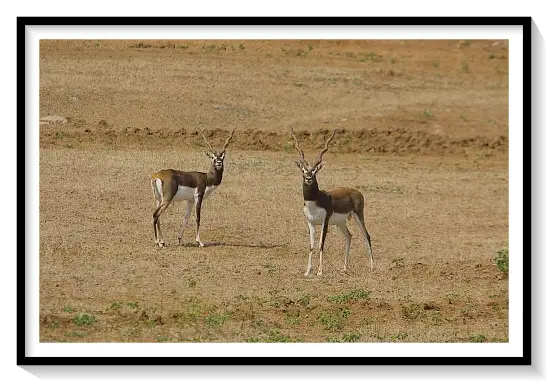
BLACK BUCK
Price range: $5.0 through $40.0 Select options This product has multiple variants. The options may be chosen on the product page -

COMMAN FINCH
Price range: $10.0 through $40.0 Select options This product has multiple variants. The options may be chosen on the product page -
Comman Shrike Bird
Price range: $175.0 through $275.0 Select options This product has multiple variants. The options may be chosen on the product page -
![Eagle or Kite Bird IndiaIn 1824, Vigorsproposed five divisions or stirpes of the family Falconidae: Aquilina (eagles), Accipitrina (hawks), Falconina (falcons), Buteonina (buzzards) and Milvina (kites, containing two genera Elanus and Milvus). He characterized the kites as having weaker bill and feebler talons than the buzzards, tail more or less forked, and wings longer than the tailIn Elanus, he grouped the black-winged kite (now several Elanus spp.), scissor-tailed kite (now Chelictinia), and swallow-tailed kite (now Elanoides). These species all have pointed wings with the second primary the longest. The pattern of scales on the legs (acrotarsi) is reticulated, and the toes are separated. But Vigors noted that only the black-winged kite had rounded undersides on the nails of its talons, a trait found in the osprey but not in any other raptors, and thus suggested a separation of Elanus into two sections.By 2015, genetic research showed that many of the kite genera are related to honey-buzzards, and that the tiny bat hawk (Machaerhamphus or Macheirhamphus) is actually related to the huge harpy eagles. Several of the large kites are related more closely to the Buteo hawks (buzzards) than to the group of "true" kites and sea-eaglesKite is the common name for certain birds of prey in the family Accipitridae, particularly in subfamilies Milvinae, Elaninae, and Perninae.[1] The term is derived from Old English cȳta (“kite; bittern”)Some authors use the terms "hovering kite" and "soaring kite" to distinguish between Elanus and the milvine kites, respectively.](data:image/svg+xml;base64,PHN2ZyB4bWxucz0iaHR0cDovL3d3dy53My5vcmcvMjAwMC9zdmciIHdpZHRoPSI1NDgiIGhlaWdodD0iMzgxIiB2aWV3Qm94PSIwIDAgNTQ4IDM4MSI+PHJlY3Qgd2lkdGg9IjEwMCUiIGhlaWdodD0iMTAwJSIgc3R5bGU9ImZpbGw6I2NmZDRkYjtmaWxsLW9wYWNpdHk6IDAuMTsiLz48L3N2Zz4=)
eagle or Kite Bird
Price range: $125.0 through $250.0 Select options This product has multiple variants. The options may be chosen on the product page -
Eurasian Pair Of Wolf
Price range: $150.0 through $350.0 Select options This product has multiple variants. The options may be chosen on the product page -
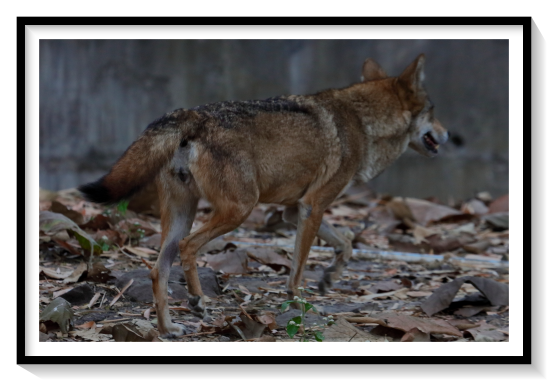
Eurasian Wolf Mammal
Price range: $100.0 through $350.0 Select options This product has multiple variants. The options may be chosen on the product page -
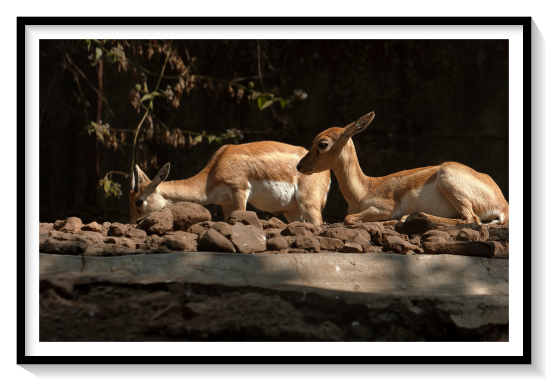
Female BlackBuck
Price range: $150.0 through $400.0 Select options This product has multiple variants. The options may be chosen on the product page -
FINCH
Price range: $5.0 through $40.0 Select options This product has multiple variants. The options may be chosen on the product page -

FISHER MAN
Price range: $5.0 through $40.0 Select options This product has multiple variants. The options may be chosen on the product page -
Formason Sambar Deer
Price range: $100.0 through $400.0 Select options This product has multiple variants. The options may be chosen on the product page -
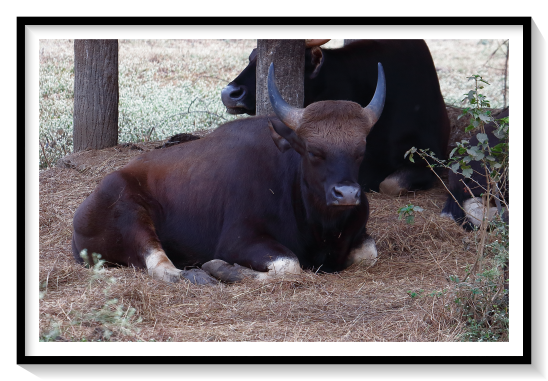
Gaur Animal Indian
Price range: $100.0 through $400.0 Select options This product has multiple variants. The options may be chosen on the product page -
Gaur Indian
Price range: $100.0 through $400.0 Select options This product has multiple variants. The options may be chosen on the product page -
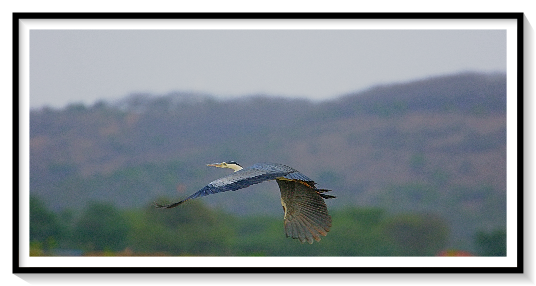
Grey Heron Bird
Price range: $100.0 through $300.0 Select options This product has multiple variants. The options may be chosen on the product page -
HERON
Price range: $5.0 through $40.0 Select options This product has multiple variants. The options may be chosen on the product page


![Eagle or Kite Bird IndiaIn 1824, Vigorsproposed five divisions or stirpes of the family Falconidae: Aquilina (eagles), Accipitrina (hawks), Falconina (falcons), Buteonina (buzzards) and Milvina (kites, containing two genera Elanus and Milvus). He characterized the kites as having weaker bill and feebler talons than the buzzards, tail more or less forked, and wings longer than the tailIn Elanus, he grouped the black-winged kite (now several Elanus spp.), scissor-tailed kite (now Chelictinia), and swallow-tailed kite (now Elanoides). These species all have pointed wings with the second primary the longest. The pattern of scales on the legs (acrotarsi) is reticulated, and the toes are separated. But Vigors noted that only the black-winged kite had rounded undersides on the nails of its talons, a trait found in the osprey but not in any other raptors, and thus suggested a separation of Elanus into two sections.By 2015, genetic research showed that many of the kite genera are related to honey-buzzards, and that the tiny bat hawk (Machaerhamphus or Macheirhamphus) is actually related to the huge harpy eagles. Several of the large kites are related more closely to the Buteo hawks (buzzards) than to the group of "true" kites and sea-eaglesKite is the common name for certain birds of prey in the family Accipitridae, particularly in subfamilies Milvinae, Elaninae, and Perninae.[1] The term is derived from Old English cȳta (“kite; bittern”)Some authors use the terms "hovering kite" and "soaring kite" to distinguish between Elanus and the milvine kites, respectively.](https://www.sunsignnaturewildlife.com/wp-content/uploads/2025/01/Eagle-or-Kite-Bird-India.webp)
![Eurasian Pair of WolfThe global wild wolf population was estimated to be 300,000 in 2003 and is considered to be of Least Concern by the International Union for Conservation of Nature (IUCN). Wolves have a long history of interactions with humans, having been despised and hunted in most pastoral communities because of their attacks on livestock, while conversely being respected in some agrarian and hunter-gatherer societies. Although the fear of wolves exists in many human societies, the majority of recorded attacks on people have been attributed to animals suffering from rabies. Wolf attacks on humans are rare because wolves are relatively few, live away from people, and have developed a fear of humans because of their experiences with hunters, farmers, ranchers, and shepherds.The wolf is the largest extant member of the family Canidae,[32] and is further distinguished from coyotes and jackals by a broader snout, shorter ears, a shorter torso and a longer tail. It is slender and powerfully built, with a large, deeply descending rib cage, a sloping back, and a heavily muscled neckThe wolf's legs are moderately longer than those of other canids, which enables the animal to move swiftly, and to overcome the deep snow that covers most of its geographical range in winter, though more short-legged ecomorphs are found in some wolf populations.[36] The ears are relatively small and triangular.he wolf's head is large and heavy, with a wide forehead, strong jaws and a long, blunt muzzle.[37] The skull is 230–280 mm (9.1–11.0 in) in length and 130–150 mm (5.1–5.9 in) in widthThe teeth are heavy and large, making them better suited to crushing bone than those of other canids, though they are not as specialized as those found in hyenas.Its molars have a flat chewing surface, but not to the same extent as the coyote, whose diet contains more vegetable matter.Females tend to have narrower muzzles and foreheads, thinner necks, slightly shorter legs, and less massive shoulders than males.](https://www.sunsignnaturewildlife.com/wp-content/uploads/2025/01/Eurasian-Pair-of-Wolf.webp)


![Formason Sambar DeerThe appearance and the size of the sambar vary widely across its range, which has led to considerable taxonomic confusion in the past; over 40 different scientific synonyms have been used for the species. In general, they attain a height of 102 to 160 cm (40 to 63 in) at the shoulder and may weigh as much as 546 kg (1,204 lb), though more typically 100 to 350 kg (220 to 770 lb).Head and body length varies from 1.62 to 2.7 m (5.3 to 8.9 ft), with a 22 to 35 cm (8.7 to 13.8 in) tail.Head and body length varies from 1.62 to 2.7 m (5.3 to 8.9 ft), with a 22 to 35 cm (8.7 to 13.8 in) tail.[9] Individuals belonging to western subspecies tend to be larger than those from the east, and females are smaller than males Among all living cervid species, only the moose and the elk can attain larger sizes.The large, rugged antlers are typically rusine, the brow tines being simple and the beams forked at the tip, so they have only three tines. The antlers are typically up to 110 cm (43 in) long in fully adult individuals. As with most deer, only the males have antlersThe shaggy coat can be from yellowish brown to dark grey in colour, and while it is usually uniform in colour, some subspecies have chestnut marks on the rump and underparts. Sambar also have a small but dense mane, which tends to be more prominent in males. The tail is relatively long for deer, and is generally black above with a whitish underside](https://www.sunsignnaturewildlife.com/wp-content/uploads/2025/01/Formason-Sambar-Deer.webp)