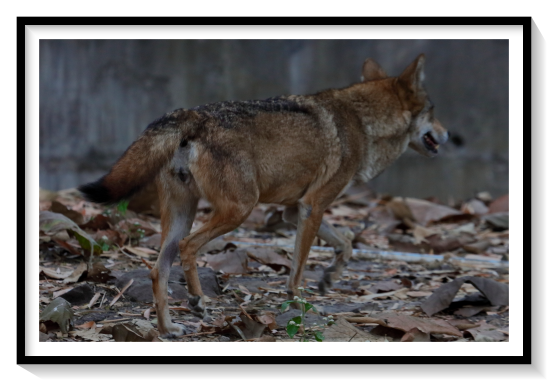
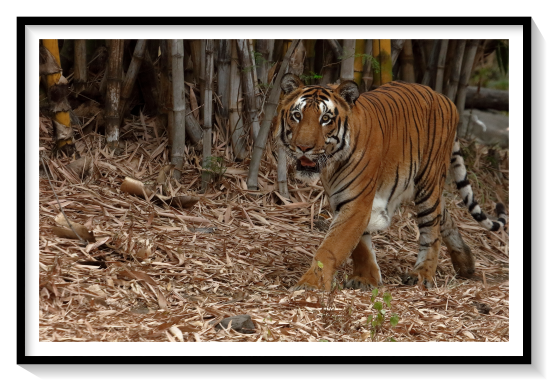
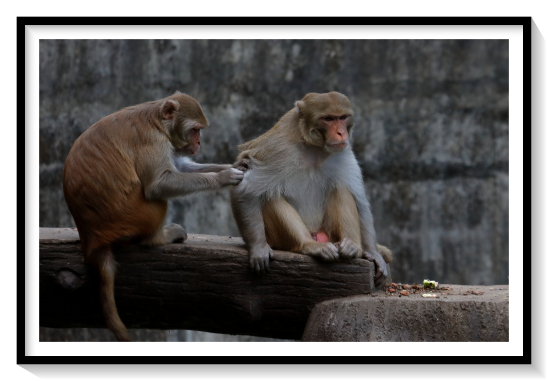
Grey Heron Bird
Price range: $100.0 through $300.0
Description
Grey Heron Bird
Additional information
| Printable Size Or Screen Resolution | A2 : 1920 x 1080 pixels Screen Display, A3 : 1200 x 800 pixels Screen Display, A4 : 1080 x 700 pixels Screen Display, Printable A2 : 3508 x 4960 PIXELS, Printable A3 : 2480 x 3508 PIXELS, Printable A4 : 1748 x 2480 PIXELS |
|---|
Related products
-
![Eurasian Pair of WolfThe global wild wolf population was estimated to be 300,000 in 2003 and is considered to be of Least Concern by the International Union for Conservation of Nature (IUCN). Wolves have a long history of interactions with humans, having been despised and hunted in most pastoral communities because of their attacks on livestock, while conversely being respected in some agrarian and hunter-gatherer societies. Although the fear of wolves exists in many human societies, the majority of recorded attacks on people have been attributed to animals suffering from rabies. Wolf attacks on humans are rare because wolves are relatively few, live away from people, and have developed a fear of humans because of their experiences with hunters, farmers, ranchers, and shepherds.The wolf is the largest extant member of the family Canidae,[32] and is further distinguished from coyotes and jackals by a broader snout, shorter ears, a shorter torso and a longer tail. It is slender and powerfully built, with a large, deeply descending rib cage, a sloping back, and a heavily muscled neckThe wolf's legs are moderately longer than those of other canids, which enables the animal to move swiftly, and to overcome the deep snow that covers most of its geographical range in winter, though more short-legged ecomorphs are found in some wolf populations.[36] The ears are relatively small and triangular.he wolf's head is large and heavy, with a wide forehead, strong jaws and a long, blunt muzzle.[37] The skull is 230–280 mm (9.1–11.0 in) in length and 130–150 mm (5.1–5.9 in) in widthThe teeth are heavy and large, making them better suited to crushing bone than those of other canids, though they are not as specialized as those found in hyenas.Its molars have a flat chewing surface, but not to the same extent as the coyote, whose diet contains more vegetable matter.Females tend to have narrower muzzles and foreheads, thinner necks, slightly shorter legs, and less massive shoulders than males.](data:image/svg+xml;base64,PHN2ZyB4bWxucz0iaHR0cDovL3d3dy53My5vcmcvMjAwMC9zdmciIHdpZHRoPSI1NDgiIGhlaWdodD0iMzgxIiB2aWV3Qm94PSIwIDAgNTQ4IDM4MSI+PHJlY3Qgd2lkdGg9IjEwMCUiIGhlaWdodD0iMTAwJSIgc3R5bGU9ImZpbGw6I2NmZDRkYjtmaWxsLW9wYWNpdHk6IDAuMTsiLz48L3N2Zz4=)
Eurasian Pair Of Wolf
Price range: $150.0 through $350.0 Select options This product has multiple variants. The options may be chosen on the product page -
Eurasian Wolf Mammal
Price range: $100.0 through $350.0 Select options This product has multiple variants. The options may be chosen on the product page -
The Great Indian Bengal Tiger
Price range: $100.0 through $400.0 Select options This product has multiple variants. The options may be chosen on the product page
![Eurasian Pair of WolfThe global wild wolf population was estimated to be 300,000 in 2003 and is considered to be of Least Concern by the International Union for Conservation of Nature (IUCN). Wolves have a long history of interactions with humans, having been despised and hunted in most pastoral communities because of their attacks on livestock, while conversely being respected in some agrarian and hunter-gatherer societies. Although the fear of wolves exists in many human societies, the majority of recorded attacks on people have been attributed to animals suffering from rabies. Wolf attacks on humans are rare because wolves are relatively few, live away from people, and have developed a fear of humans because of their experiences with hunters, farmers, ranchers, and shepherds.The wolf is the largest extant member of the family Canidae,[32] and is further distinguished from coyotes and jackals by a broader snout, shorter ears, a shorter torso and a longer tail. It is slender and powerfully built, with a large, deeply descending rib cage, a sloping back, and a heavily muscled neckThe wolf's legs are moderately longer than those of other canids, which enables the animal to move swiftly, and to overcome the deep snow that covers most of its geographical range in winter, though more short-legged ecomorphs are found in some wolf populations.[36] The ears are relatively small and triangular.he wolf's head is large and heavy, with a wide forehead, strong jaws and a long, blunt muzzle.[37] The skull is 230–280 mm (9.1–11.0 in) in length and 130–150 mm (5.1–5.9 in) in widthThe teeth are heavy and large, making them better suited to crushing bone than those of other canids, though they are not as specialized as those found in hyenas.Its molars have a flat chewing surface, but not to the same extent as the coyote, whose diet contains more vegetable matter.Females tend to have narrower muzzles and foreheads, thinner necks, slightly shorter legs, and less massive shoulders than males.](https://www.sunsignnaturewildlife.com/wp-content/uploads/2025/01/Eurasian-Pair-of-Wolf.webp)