Bangladesh
Showing all 3 results
-
![Bengal Jungle Tiger IndiaThe Bengal tiger is defined by three distinct mitochondrial nucleotide sites and 12 unique microsatellite alleles. The pattern of genetic variation in the Bengal tiger corresponds to the premise that it arrived in India approximately 12,000 years ago.[7] This is consistent with the lack of tiger fossils from the Indian subcontinent prior to the late Pleistocene, and the absence of tigers from Sri Lanka, which was separated from the subcontinent by rising sea levels in the early HoloceneThe Bengal tiger's coat is yellow to light orange, with stripes ranging from dark brown to black; the belly and the interior parts of the limbs are white, and the tail is orange with black rings. The white tiger is a recessive mutant, which is reported in the wild from time to time in Assam, Bengal, Bihar and especially in the former State of Rewa. However, it is not an occurrence of albinism. In fact, there is only one fully authenticated case of a true albino tiger, and none of black tigers, with the possible exception of one dead specimen The Bengal tiger ranks among the biggest wild cats alive today.[14] Males and female Bengal tigers in Panna Tiger Reserve reach a head-to-body length of 183–211 cm (72–83 in) and 164–193 cm (65–76 in) respectively, including a tail about 85–110 cm (33–43 in) long. Total length ranges from 283 to 311 cm (111 to 122 in) for male tigers and 255–285 cm (100–112 in) for female tigers.[15] They typically range from 90–110 cm (35–43 in) in shoulder height](data:image/svg+xml;base64,PHN2ZyB4bWxucz0iaHR0cDovL3d3dy53My5vcmcvMjAwMC9zdmciIHdpZHRoPSI1NDgiIGhlaWdodD0iMzgxIiB2aWV3Qm94PSIwIDAgNTQ4IDM4MSI+PHJlY3Qgd2lkdGg9IjEwMCUiIGhlaWdodD0iMTAwJSIgc3R5bGU9ImZpbGw6I2NmZDRkYjtmaWxsLW9wYWNpdHk6IDAuMTsiLz48L3N2Zz4=)
Bengal Jungle Tiger
Price range: $100.0 through $299.0 Select options This product has multiple variants. The options may be chosen on the product page -

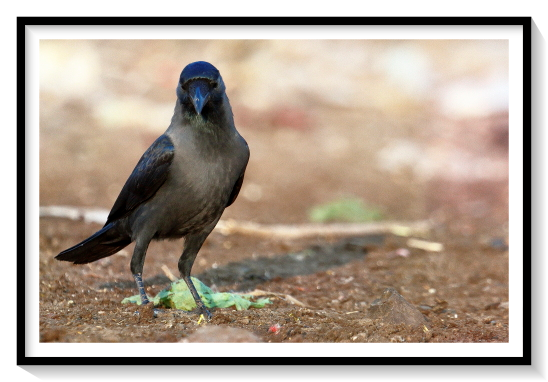
Colombo House Crow
Price range: $175.0 through $275.0 Select options This product has multiple variants. The options may be chosen on the product page -
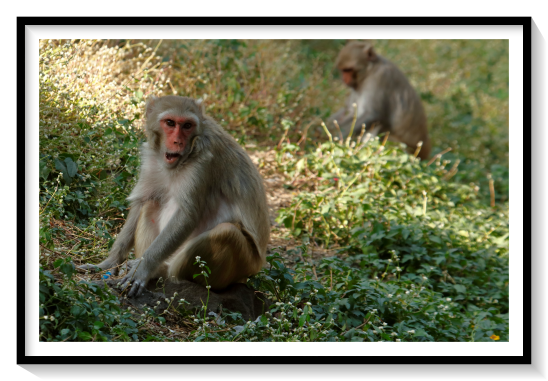
Rufus Macaque Monkey
Price range: $275.0 through $375.0 Select options This product has multiple variants. The options may be chosen on the product page
![Bengal Jungle Tiger IndiaThe Bengal tiger is defined by three distinct mitochondrial nucleotide sites and 12 unique microsatellite alleles. The pattern of genetic variation in the Bengal tiger corresponds to the premise that it arrived in India approximately 12,000 years ago.[7] This is consistent with the lack of tiger fossils from the Indian subcontinent prior to the late Pleistocene, and the absence of tigers from Sri Lanka, which was separated from the subcontinent by rising sea levels in the early HoloceneThe Bengal tiger's coat is yellow to light orange, with stripes ranging from dark brown to black; the belly and the interior parts of the limbs are white, and the tail is orange with black rings. The white tiger is a recessive mutant, which is reported in the wild from time to time in Assam, Bengal, Bihar and especially in the former State of Rewa. However, it is not an occurrence of albinism. In fact, there is only one fully authenticated case of a true albino tiger, and none of black tigers, with the possible exception of one dead specimen The Bengal tiger ranks among the biggest wild cats alive today.[14] Males and female Bengal tigers in Panna Tiger Reserve reach a head-to-body length of 183–211 cm (72–83 in) and 164–193 cm (65–76 in) respectively, including a tail about 85–110 cm (33–43 in) long. Total length ranges from 283 to 311 cm (111 to 122 in) for male tigers and 255–285 cm (100–112 in) for female tigers.[15] They typically range from 90–110 cm (35–43 in) in shoulder height](https://www.sunsignnaturewildlife.com/wp-content/uploads/2025/01/Bengal-Jungle-Tiger-India.webp)